Honorary Doctor Fiona Copeland Congratulations
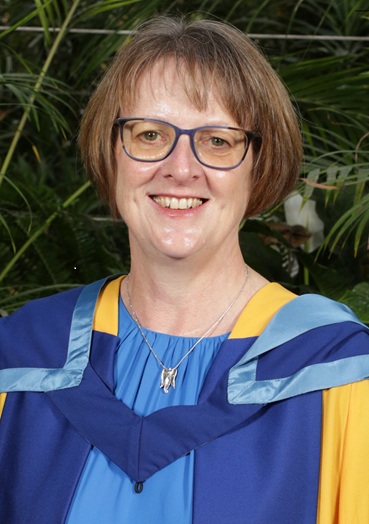
“Life throws you curveballs, it’s what you do with them that matters.”
When Fiona Copeland first heard that both her sons had been diagnosed with a rare lung condition, her mind jumped straight to wheelchairs and limitations. Instead, her fight reshaped the way Britain approaches rare diseases.
Now, as she accepted an honorary doctorate from The Open University, her name joins the ranks of celebrated figures such as Sir David Attenborough and King Charles III, a recognition of her lasting impact.
On the bright morning of 19th September 2025, Copeland stepped into the Barbican Hall with other graduates from the Open University. She wasn’t there as a student, but to walk the stage for the first time in her life as the recipient of an honorary doctorate, an award for her tireless work supporting families affected by rare genetic disorders.
“I didn’t go to university,” she said. “So, I’ve never had a graduation. This feels surreal.” Half delighted, half dazed, she admitted she never expected recognition of any kind. “I never set out to change the world,” she added. “I just didn’t want another parent to be told they were making a fuss when they knew something was wrong.”
The award marked not simply an accolade, but the culmination of decades shaped by grief, sacrifice and the daily grind of care.
From ambition to shock
Before her life turned to advocacy, Copeland’s world looked very different. She was ambitious, career-driven, immersed in long hours and the steady climb up the professional ladder. “We were working so hard, aiming for the bigger house, the better car,” she recalled. “Then PCD came into our lives, and suddenly you realise those things don’t matter at all.”
PCD – Primary Ciliary Dyskinesia – is a genetic disorder that compromises the lungs, sinuses and other organs. When her sons, Euan and Gregor, were finally diagnosed at six and four, after years of misdiagnoses, the words “chronic lung disease” were as terrifying as they were vague. “I didn’t even know what ‘chronic’ meant,” she said. “I just knew it wasn’t good. We thought the boys might never play football, never enjoy school, never live fully.”
Fear gave way to anger, then denial, before something steadier emerged. “You learn to live with the unknown,” she said. “You build relationships with the doctors and nurses because they become part of your extended family. And over time, you realise it is possible for your children to have a full, happy life, even if it looks different.”
Family life changed almost overnight. Treatments dictated the rhythm of each day: physiotherapy twice a day, nebulisers, medicines. “It was supposed to take twenty minutes,” she said. “But with Gregor being so little, it could sometimes take forty. We used to have to try to catch him just to get him to do it.”
Routines replaced rituals. Bedtimes became clinical. Copeland gave up her job to manage the boys’ care. Holidays, friendships, and the simplest of evenings were reshaped around illness. “I’d done three hours of work before the kids even got to school,” she said. “By the time I waved them off, I was exhausted.”
Yet out of that exhaustion came a sense of mission. “I thought, I don’t want another family to go through what we went through. So, I started speaking up.”
Within a year she had joined the PCD Support Group. What began as volunteering soon turned into leadership. She organised events, joined the committee, and before long was chairing it. “I became an expert because I had to, it just happened by default,” she said. “The doctors know how to treat the condition, but they don’t know what it’s like to live with it. All I did was keep telling our story.”
Her story carried weight. The endless routines, the tired mornings, the little details doctors often overlooked, these became the material of advocacy. Her persistence, others called it tenacity, became her strength.
Gradually she moved from simply telling her family’s story to influencing policy. Under her guidance, the group created peer-reviewed standards of care, persuading the NHS to establish in 2006. Then followed many more years of advocacy to secure paediatric and adult care services too. “It took years and years of going back,” she said. “The NHS can feel like smoke and mirrors, but we didn’t give up.”
Her work spread across borders. She helped link families in Europe, supported groups in France and Portugal, and served as a trustee of the Ciliopathy Alliance, pushing for collaboration between patients, clinicians and researchers. Still, she never saw herself as a campaigner. “I just told them: this is our life. This is what it’s like.”
Her public achievements rest on years of private sacrifice. Copeland walked away from a career, financial security and more hours of her life than she can count, to look after her children and fight for systemic change.
She is blunt about the cost. “People say, ‘I don’t know how you do it.’ But you just do, because you must. You’ve got children depending on you. There are days you want to scream and cry, but most of the time you just keep going.”
Her sons, now adults, are thriving and proud. “They used to roll their eyes when I told everyone their story,” she said, laughing. “But they’re proud of me now. They see the difference it’s made, not just for them but for others.”
Recognition and responsibility
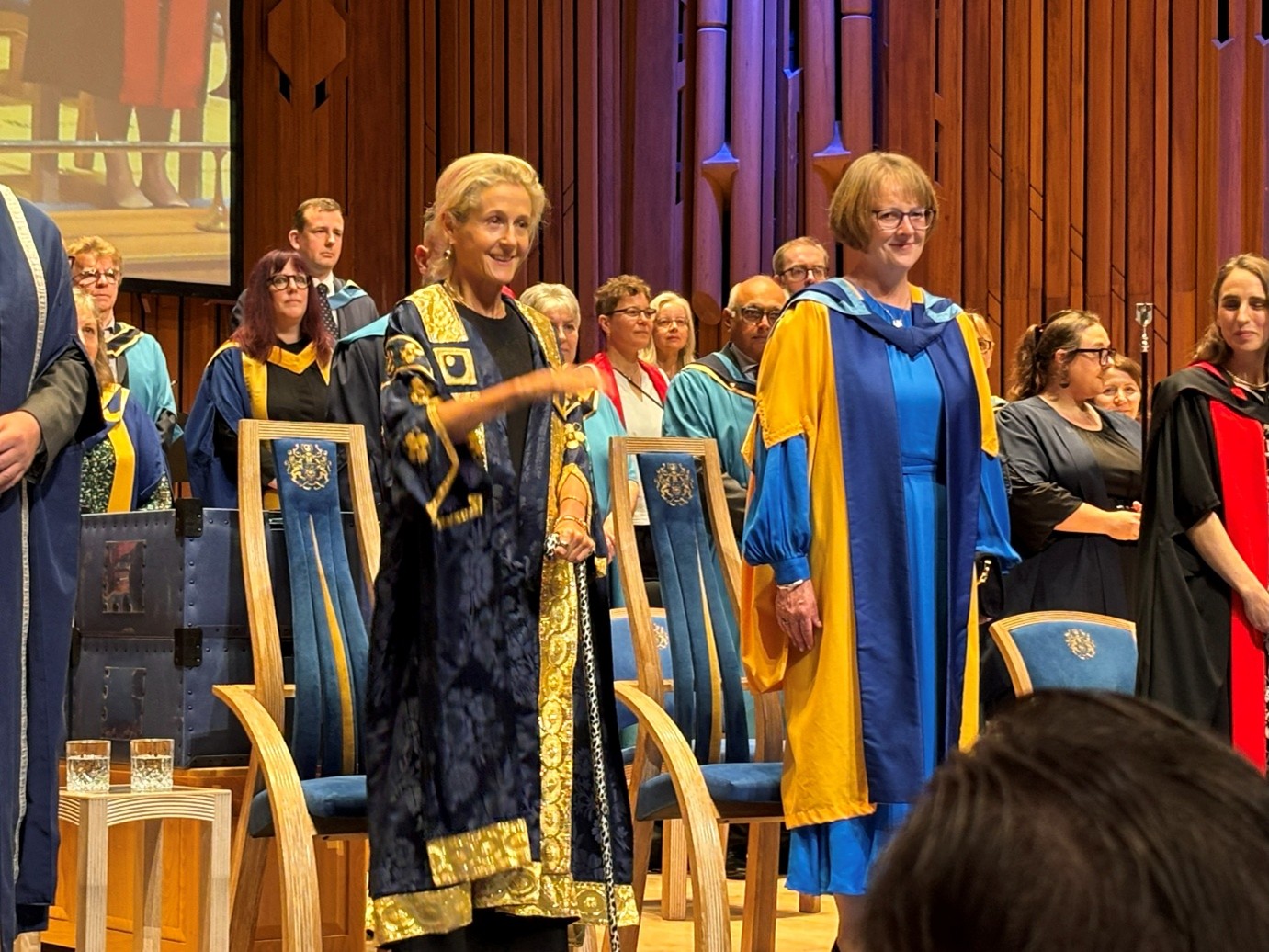
The honorary doctorate is not the first time she’s been formally recognised. In 2020 she received the British Empire Medal. Families she had supported over the years sent letters of thanks, reminding her of things she had long forgotten, the advice she had given in late-night emails, and the reassurance she provided during difficult moments.
But the doctorate feels different. “People had always joked about getting me a gong from the Palace,” she said. “But I never imagined a doctorate.”
The open university has a longstanding tradition of awarding honorary doctorates to individuals who have made outstanding contributions to society. Sir David Attenborough was awarded an honorary doctorate back in 1980 in recognition of his illustrious career as a naturalist and broadcaster.
Other notable honorary graduates include Sir Quentin Blake, Elaine C. Smith, Sharon Corr, and even the King himself, King Charles III.
And now, Fiona Copeland. Joining this distinguished alumnus recognises the impact that she’s made in inspiring others while embodying the values of lifelong learning.
However, for her, the significance lies not in her own achievement, but in the visibility that it gives to others. “I hope it shines a light on PCD and ciliopathies. I hope it shows that patients’ voices matter.”
Twenty years ago, there were no clear treatments for ciliopathies, little research, and scant care provision. Today, trials are under way and advances in genetics and personalised medicine are beginning to offer hope.
Copeland is cautiously optimistic. “If a baby was born today with PCD, I genuinely believe that within ten years we’ll be able to fix them,” she said. “Maybe not for my boys, but for the next generation.”
She knows, though, that clinical trials bring hesitation. Families worry about the risks, the side effects, the disruption. “Someone has to be the first,” she said. “It’s about building trust, so patients feel empowered to take part.”
That balance between hope and fear or progress and caution, that’s the frontier of her work now.
Legacy
Looking back, Copeland insists her story is not remarkable, just the natural outcome of circumstance. “Life throws you curveballs,” she said. “It’s what you do with them that matters. We chose to stay positive, to laugh when we could, and to keep going.”
If she could return to the day of her sons’ diagnosis, she would reassure her younger self. “It’s going to be all right. Life won’t be easy, but you’re strong enough. And you’ll have an amazing life because of it.”
Her doctorate is more than just an accolade, it stands as a testament to a life defined by persistence, sacrifice, and the unwavering support of her family and friends. The contributions of researchers, clinicians, the PCD Support Group, and the Ciliopathy Alliance were also instrumental in her journey.
“I’m not great at asking for help,” she admitted in her speech. “But I’ve learnt that when you invite others in, the outcome is always stronger.”
That, perhaps, is the heart of her legacy: not just what she achieved, but the truth she lived, that no family should ever have to face such battles alone.
By Adrian Madzura