Information for Patients about Participating in Research
How does research work?
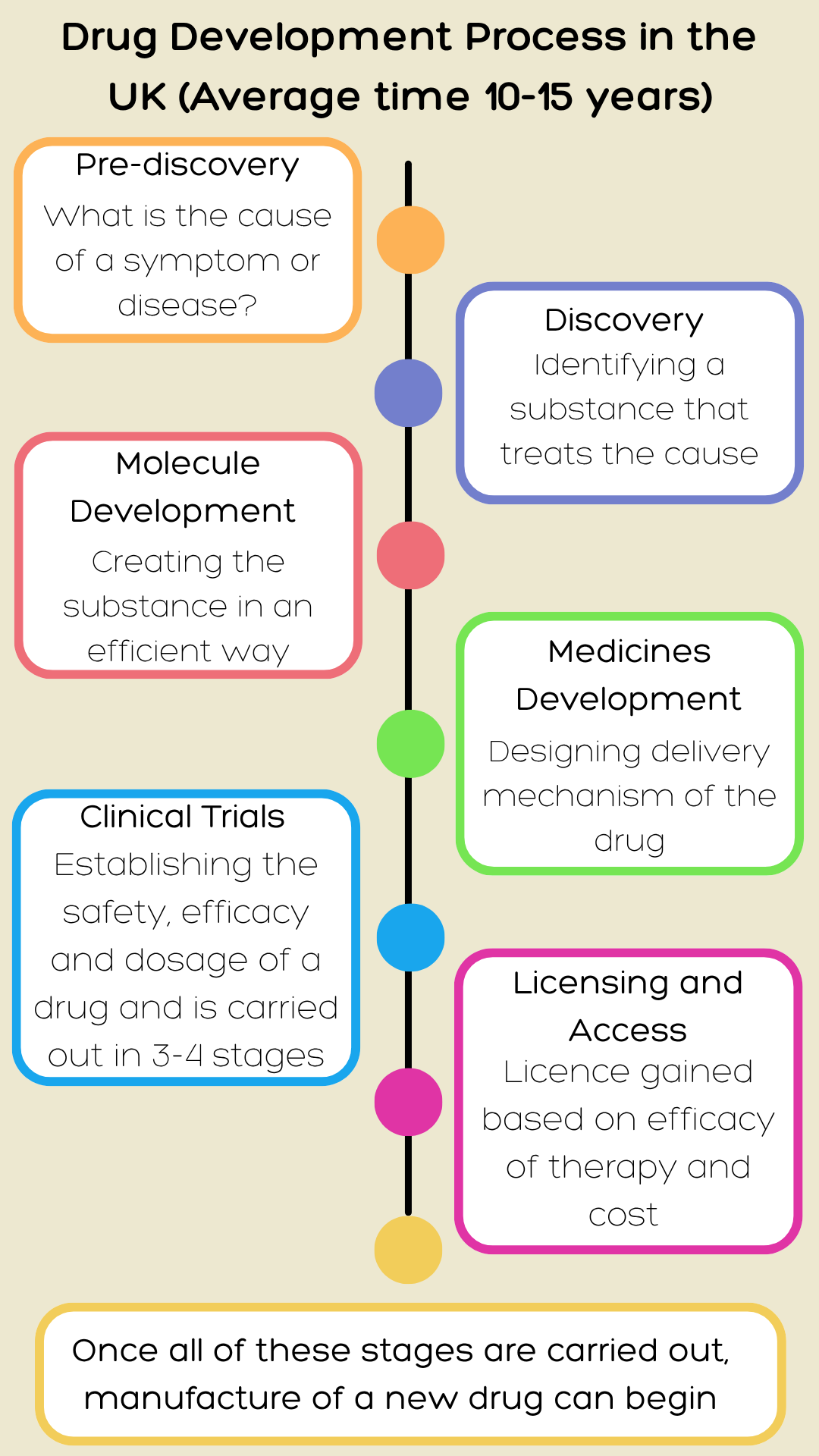
Before a new drug or treatment can be used by healthcare providers, a lot of experiments and testing must be carried out to prove that the drug or treatment is functional, safe and effective.
Research typically starts at a laboratory level. Scientists will grow cells that are then used to show how a drug or treatment creates a response that can help treat or manage a disease. This process can take years to complete and requires a lot of evidence, often carrying out many rounds of testing.
After scientists have proven that a drug or treatment works on cells, the testing moves into animals to see what happens when multiple types of cells and organs are involved. This stage also investigates if there are any side effects to be aware of, tests delivery methods and explores doses and toxicity.
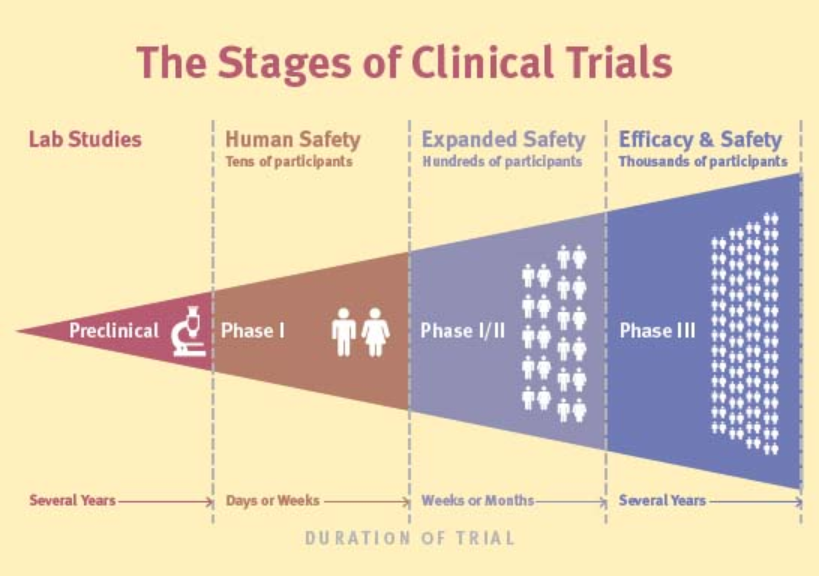
After animal testing has proven the safety and functionality of the drug or treatment, the testing moves into humans in the form of clinical trials, starting at a small scale (tens of people) and then moving into a larger group (hundreds of people). Once these trials have ensured the drug is safe to use and effective, and the correct dosage is recognised, the use of the treatment can then be considered for clinical use where appropriate.
In order for a drug or treatment to be provided to the public, there are a lot of scientific and legal bridges to cross. This protects people from being given anything unsafe, but also means there are a lot of points research can fail. The world of research is relentless, and new discoveries and treatments are being created and tested constantly.
How can I get involved?
PPIE
Patient and Public Interaction and Engagement, or PPIE for short, is a way of ensuring that various people are involved in research that is actively being carried out. By involving people who will most benefit from research, a project can be shaped and directed to best support the needs of those patients, and therefore have an improved impact on healthcare.
Often this involves sitting down for a meeting with other patients, clinicians and scientific researchers. Conversations will be around targets for treatments and drugs, things that are of particular challenge to patients, and how those struggles would be best addressed. Clinicians, researchers and patients are all involved in conversations about where the treatment focus should be, so that the benefit of expensive research is as great as possible.
PPIE is a collaborative process that involves patients and the public in all aspects of research, from the initial idea to the dissemination of findings. It is a fundamental aspect of research that ensures the research is grounded in real experiences and is relevant to the people it aims to benefit.
Why does it matter?
These conversations are so important, as often clinicians and researchers do not have personal experience of the conditions and side effects they are researching or treating. When their methods are uninformed by people who are directly affected, it can be easy to focus on the wrong parts of a condition to treat.
Additionally, research is expensive: it costs approximately £1.15 billion to develop a new drug. This expense should be put towards research, and hopefully treatments, that are of the greatest benefit to all groups involved. PPIE is essential for ensuring that research is relevant to patients and the public, leading to better outcomes and a more informed healthcare system. Here are some key reasons why PPIE is crucial:
- Improves research quality: PPIE contributes to more relevant, well-designed and ethically sound research by incorporating input from people with lived experience, which enhances the appropriateness and effectiveness of the research.
- Enhances study design: public contributors provide valuable feedback on how trials should be run, ensuring that the information is understandable, the burden and benefits are shared, and consent is fully informed.
- Reduces health inequalities: by involving people who are underserved by research, PPIE helps design research that is accessible to these groups, potentially reducing health inequalities.
- Increases relevance: PPIE helps researchers understand what topics are important to the public and what outcomes matter most to them, ensuring that the research is aligned with the community's needs.
Clinical trials
Clinical trials are a vital part of getting a treatment or drug to the point of being used in a healthcare environment. Getting involved with a clinical trial is a way to directly help research into a cause that may affect you or your loved ones. You can get involved at PPIE level or as a participant of the trial.
Patient participation in a clinical trial is dependent on a number of factors. Some trials may only be suitable for patients of a certain age or health status, or may be specific about habits (for example smoking or alcohol consumption). These criteria must be set up as trials only have small groups of patients involved, and are attempting to prove that a drug not only works but is an improvement on any currently available treatments. Because of this, some selection points can become exclusionary (prevent participation) if they might change the results of the trial.
How safe are clinical trials?
Clinical trials do come with some risks that are typically specific to the drug being tested. To make it to a clinical trial, a drug has to be assessed by a number of agencies. The Medicines and Healthcare products Regulatory Agency (MHRA) inspect the production site of a medication to ensure safety standards are met, and authorise the trial. The Health Research Authority (HRA) check the ethics of the study and protect patients and the general public.
Alongside the approval from the appropriate authorities, patients in clinical trials are provided with gold-standard care. This allows clinicians to monitor the side effects and functionality of treatment, while also making room for any questions or concerns to be quickly discussed and addressed.
The phases of clinical trials
This stage is used to assess how a drug is metabolised (how it is digested and moves) and removed from the body, in 20 to 80 healthy volunteers or patients who are closely monitored. This can provide information about the dose of the drug and any side effects to be aware of.
In this phase, patients who are affected by the disease that is the target for treatment are given the drug. Not everyone is treated with the active drug: some patients will receive a placebo (an inactive substance). Patients are not informed whether they are being given the drug or the placebo, which allows the scientists to prove the drug is actually effective. Often the doctors also will not know which substance a patient is being given, to prevent the outcome of the trial being influenced.
This final phase compares the new drug to both a placebo and any drug currently in use for treating the same condition, and the treatment is provided to thousands of patients. This phase is open to a wider patient group and is informative of the drug's functionality within a variety of disease types, stages and indications. While this stage can take many years to complete, it is key to understanding the safety and side effects of a drug across a diverse population. The data from this phase is used to provide regulatory agencies with the necessary evidence to prove that the treatment should be licensed.
Things to consider before getting involved
- Will time off work be required, and will I be compensated for my time and travel?
- Can I stay on my current treatment regime?
- What are the possible side effects?
- Who do I contact if there is an issue?
- How do I find out the results?
While these are some useful questions to consider, there are many things to research before getting involved in a clinical trial. Be sure to do some research and feel fully informed of what the trial requires.