Spotlight on our Chair Hannah Mitchison - 'We can't do this without patients'
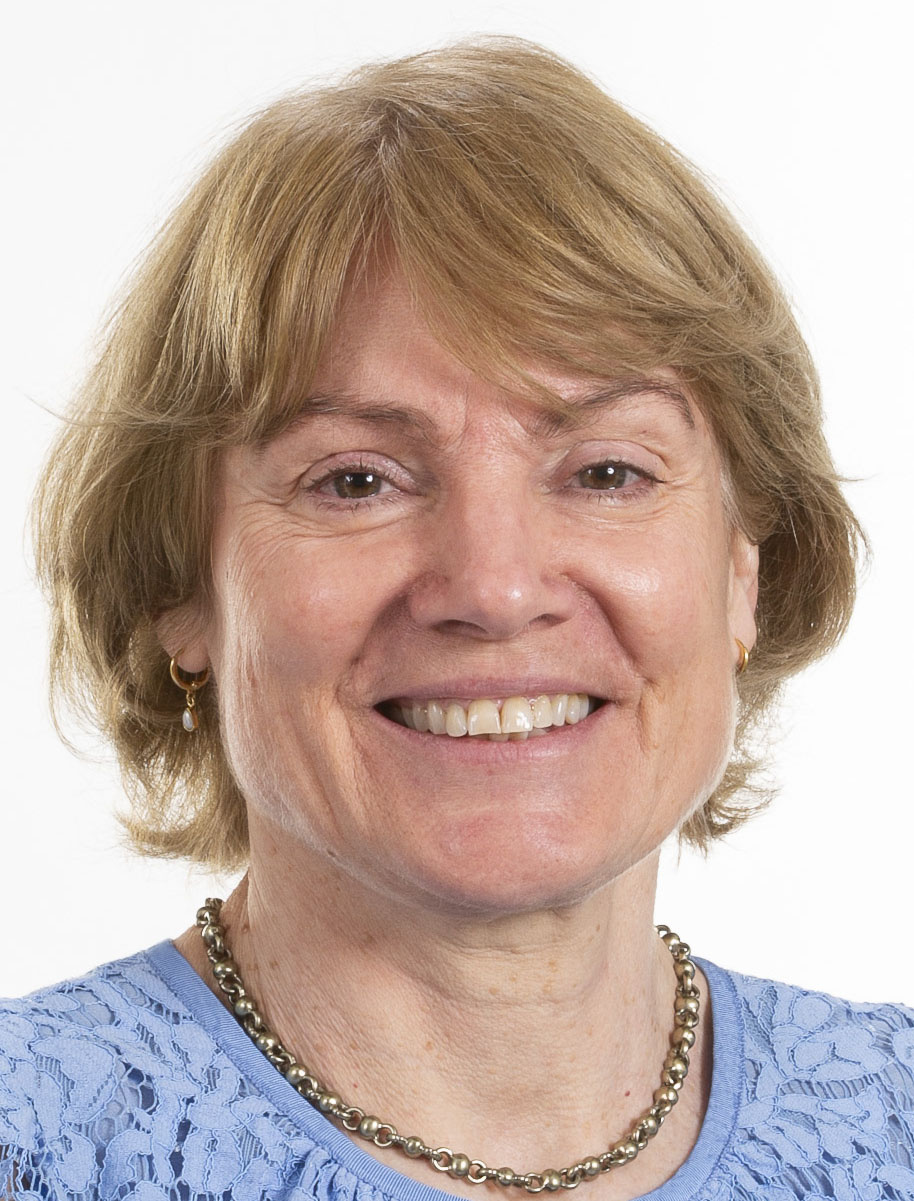
A Spotlight on our Chair, Hannah Mitchison: “We can’t do this without patients”
From a childhood spent next door to a medical research institute to three decades at the forefront of ciliopathy research, she reflects on science, advocacy and why progress depends on listening to those living with rare disease.
Hannah Mitchison grew up with science so close to home that it barely announced itself as anything special. Born in north London, she spent her early years living next door to her father’s workplace, a medical research institute in Mill Hill. There was a small garden gate between the family house and the laboratory. “He would just walk to work,” she recalls. “So, my dad was a complete scientist, and he kept going till he was in his eighties."
It was an environment steeped in research, but not one that demanded imitation. Mitchison describes her family as divided. On one side, biology ran deep: her father an immunologist, two uncles in medical and cell biology, an older brother who would later become a professor at Harvard. On the other, her mother, born on the Isle of Skye, had “nothing directly to do with science”. That contrast, she suggests, mattered. It meant science was present, but never compulsory. “I would call myself more of a jobbing scientist,” she says, resisting the language of brilliance or inevitability.
After studying biology at Sussex, she moved to Birmingham for a PhD in virology. It was the late 1980s, a moment of upheaval in biomedical research. While her own project struggled to gain traction, a transformation was taking place around her. “What was happening at that same time was the human genome was getting sequenced and so human genetics was really exploding,” she says. Watching friends uncover disease-causing genes while her own work stalled proved decisive. “It was a very exciting time. Lots of money, lots of investment. I could just see that this was really what I wanted to do.”
That decision brought her back to London and to University College London, where she has built a career spanning more than three decades. It is a length of service she acknowledges as unusual, but not static. “It’s funny to be in a place of work for 30 years on and off,” she says, “but it’s always changing.” Periods spent working in laboratories in the United States and Australia punctuated that continuity, as did the rapid evolution of the field itself.
Mitchison’s move into ciliopathy research came around the year 2000, when she was working in a paediatric department at University College Hospital. At the time, understanding was limited. “We were really in the dark,” she says. Conditions such as Primary Ciliary Dyskinesia were recognised clinically, but their genetic causes were poorly understood. Symptoms appeared disconnected: chronic lung disease, fertility problems, internal organs positioned on the wrong side of the body. “It was only finding out that these diseases were caused by problems in cilia that came out quite a bit later,” she explains.
Cilia, once dismissed as biological curiosities, turned out to be central. Like microscopic engines, they move fluid, sense signals and guide development. When they fail, the effects ripple across the body. Over the next 25 years, Mitchison and others helped identify more than 60 genetic causes of PCD alone. “I really feel like I’ve been there from the beginning,” she says.
For much of that time, the people affected by these conditions remained at a distance. “Not being a clinician, not being a doctor, you’re kind of one step away,” she reflects. That distance narrowed when she began speaking at patient support events. Her first presentation to families affected by PCD remains vivid. “I remember being a bit worried about what to say,” she says, “and ending up getting questions that you don’t expect.”
Those encounters reshaped how she thought about research. Discovery was no longer just a technical pursuit but a shared endeavour. “The connection to disease is quite inspiring,” she says. Patient communities, she realised, were not peripheral to progress but essential to it.
That belief underpins her involvement with the Ciliopathy Alliance, an organisation bringing together patients, clinicians and researchers across more than 30 rare conditions. Individually, many ciliopathies struggle for recognition or funding. Collectively, they carry greater weight. “Surely putting all these voices together would give us more power, more say,” Mitchison says.
Her role within the Alliance is collaborative rather than directive. “This is really for patients,” she says. “I can’t provide the patient perspective.” Instead, she offers scientific context and helps connect research initiatives with lived experience. She speaks with admiration of those who lead advocacy groups, often while managing complex health needs themselves. “They’re really quite unique,” she says. “Single-minded, really focused. It’s such hard work to get a charity off the ground.”
The work has not been without frustration. Efforts to establish multidisciplinary NHS clinics for all ciliopathies failed to secure funding, despite years of campaigning. Progress, however, has taken other forms, from specialist services for some conditions to international conferences where patients and researchers meet as equals. “The ‘CILIA’ conference series are special science conferences, where patients have their own day,” she notes. “It’s a proper way to bring patients together with researchers.”
In the laboratory, Mitchison’s focus has shifted again, this time towards therapy development. After decades spent understanding genetic mechanisms, she is now trying to intervene. “We’re now working on a therapy where we’re making cilia beat again,” she says. It is early-stage work, confined to tissue cultures, but its significance is clear. “If I could get something into patients who are sick in a clinic and actually help them in reality, not in a tissue culture dish, that would be huge.”
Funding remains a constant pressure. “The only way we can do research is to fund every single thing that we do,” she says. For rare diseases, sustaining momentum can become harder as initial discoveries are made. Alongside this is the responsibility she feels for younger researchers. “You’re responsible for other people’s careers while they’re here,” she says. “That’s a big challenge.”
Outside work, her life has followed a different rhythm. She married in her late thirties and became a mother in her early forties, something she describes as “such a blessing”. Many senior female scientists, she observes, have small families or none at all. “It’s a funny life,” she says. “Work and family become your main occupation.”
Asked what she would want families affected by ciliopathies to know, her answer is unequivocal. “We can’t do this without patients,” she says. Participation in research, sharing experiences and shaping priorities are not optional extras. “All their efforts to get involved are just invaluable. We’re very grateful.”
Looking ahead, Mitchison avoids grand promises. Progress, she believes, is incremental and hard-won. What sustains her is the steady accumulation of understanding, the sense that the field has moved from ignorance to insight within a single career. “Scientific discovery is unbelievably exciting,” she says. “To generate something new, to see people interested, asking questions.”
For her, science has always been about more than data. It is about people, patience and the long view.
Interview by Adrian Madzura