Lab Visits for our Interns and Volunteer
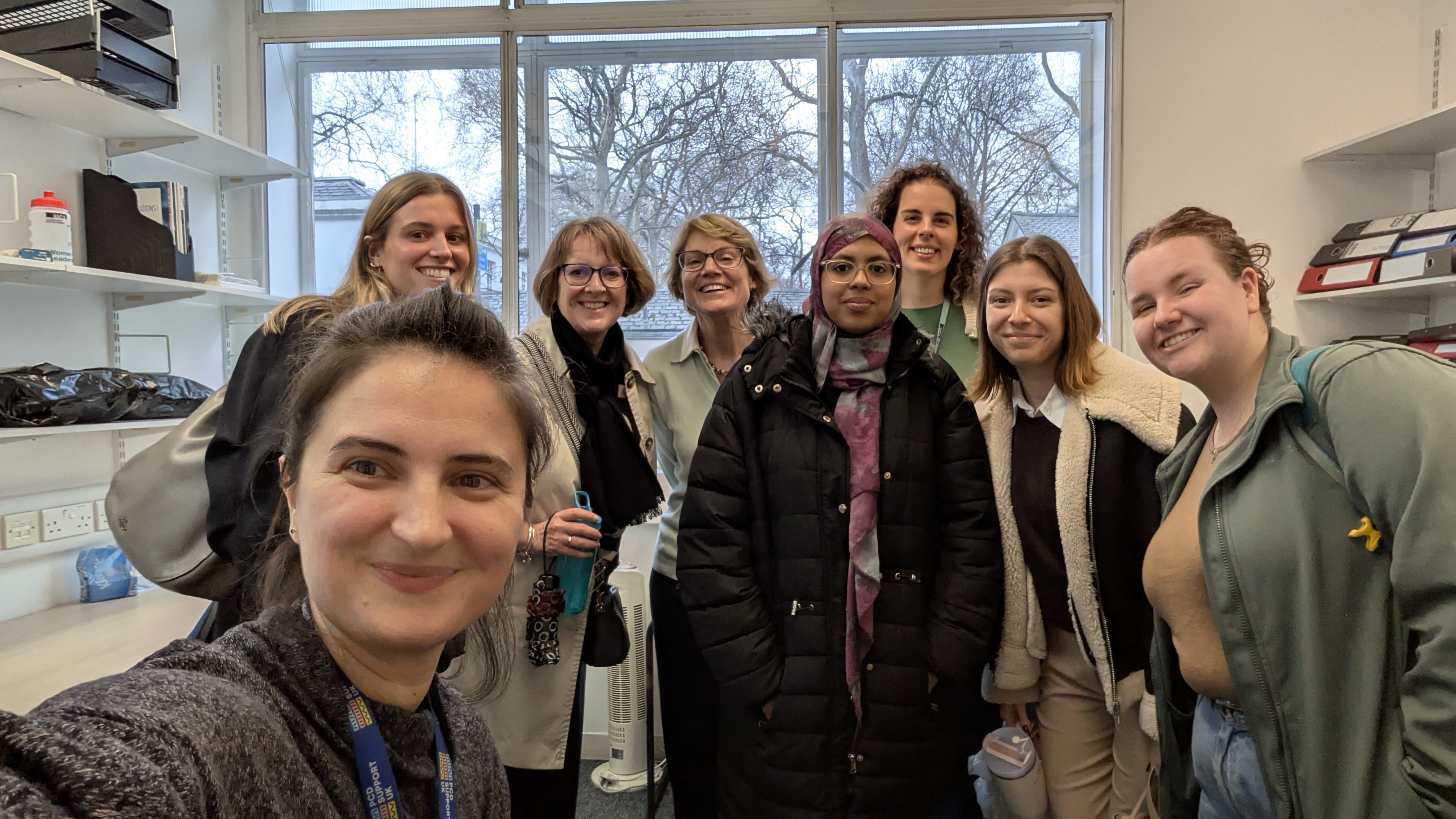
On the 15th January we took our interns and volunteer,Hannah Knocker, to visit the PCD research labs at the Institute of Child Health and the Diagnostic Labs at the Royal Brompton Hospital.
Here is Hannah's reflection:-
The visit offered valuable insight into both the research and clinical pathways involved in Primary Ciliary Dyskinesia. At the Institute of Child Health, we were welcomed into the laboratory environment and introduced to several areas of active research. We learned about lipid nanoparticle development and characterisation, including how particle size and charge are measured, before being given a clear and accessible introduction to PCD and its underlying biology.
Later in the visit, we had the opportunity to see airway epithelial models first-hand, including air–liquid interface cultures and organoids. Observing cilia under the microscope, and directly comparing cultures derived from PCD patients with those from healthy donors, was particularly impactful. Seeing static cilia alongside coordinated beating cilia provided a striking and tangible demonstration of how molecular and structural defects translate into functional impairment, and reinforced the relevance of the research being undertaken.
At the Royal Brompton Hospital, the focus shifted to clinical diagnostics. Learning about the diagnostic pathway, including high speed video microscopy, immunofluorescence, electron microscopy, and multidisciplinary team discussion, highlighted the complexity of diagnosing rare diseases and the importance of integrating multiple techniques rather than relying on a single test.
From my perspective, one of the most valuable aspects of the day was the openness and enthusiasm of the researchers and clinicians involved. Being welcomed into laboratory and diagnostic spaces, having time taken to explain complex work clearly, and being encouraged to ask questions created a genuine sense of engagement rather than passive observation. The informal elements of the day, including the quiz at the end of the visit, further helped to consolidate learning and foster open discussion in a relaxed setting.
Overall, the visit reinforced the value of inviting external groups into research and clinical environments. It strengthened my understanding of how laboratory research and clinical practice are closely linked, highlighted the importance of communication alongside technical expertise, and demonstrated how engagement can be mutually encouraging for both visitors and researchers. It was a thoughtful and well organised experience, and one I am very grateful to have been part of.